


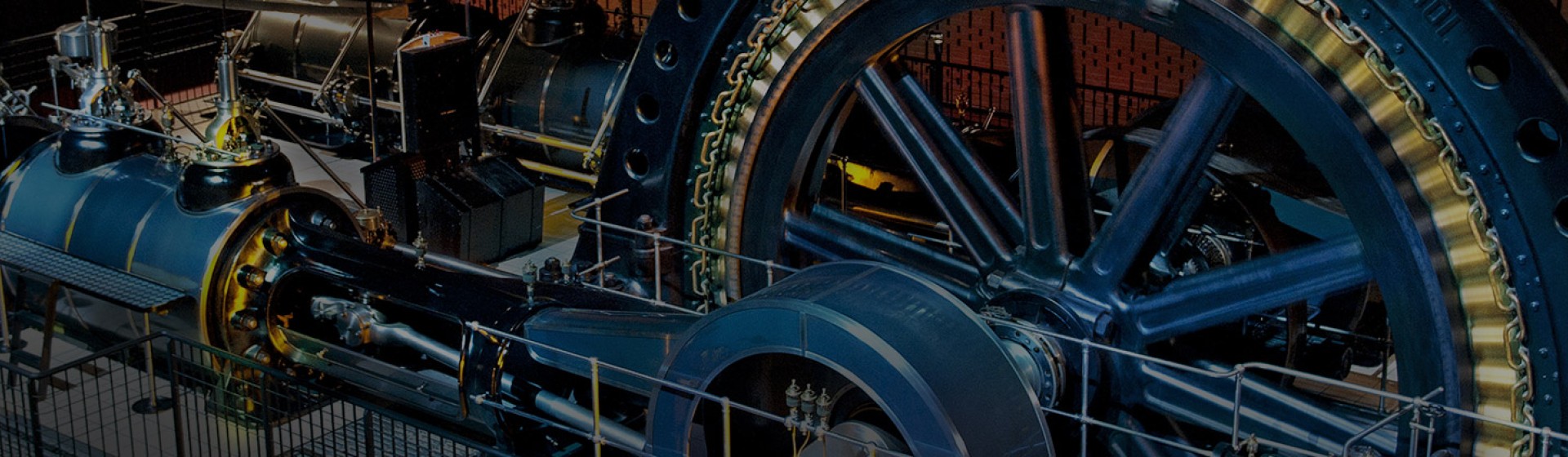
The starting point for the creation of the museum, this gigantic steam generator weighing several tonnes, was saved from destruction in the 1980s, and with it the heritage of a bygone era. This characteristic technology of the period is presented primarily to tell the story of the men who worked there, through a multimedia spectacle. Listen hard: you can hear the sounds of the machine at work and the foremen’s whistles…
Test your knowledge
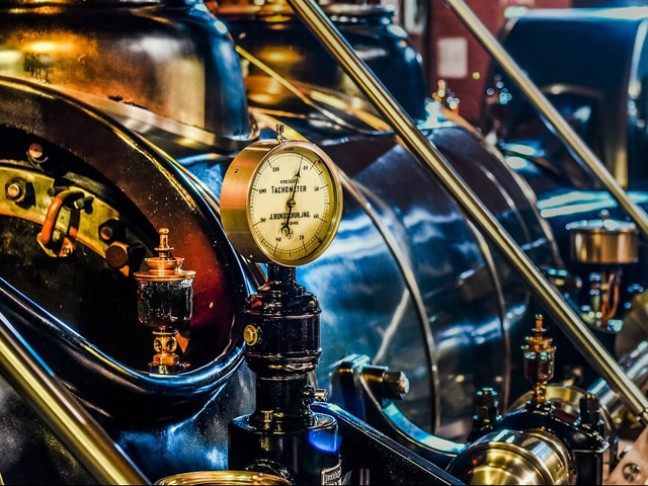
The dismantling, restoration, and reassembly of the machine required 2,000 hours of work.
WRONG
In 1978, the machine consisted of 170 tons of different materials damaged by 30 years of inactivity. Between dismantling it at the DMC premises in Mulhouse, restoring it, and reassembling it in its dedicated room at the Electropolis Museum, a total of 20,000 hours of work were required, across all companies involved.

Daily lubrication of the machine is a very complex process.
RIGHT
Indeed, lubricating the machine to ensure its proper functioning requires several times a day 48 drip oilers, 4 scrapers, 5 oil pumps, and 315 points to be greased manually.

At DMC factory, the machine was shut down during the lunch break.
In the 1920s, when workers at DMC factory stopped working for their lunch break, the machine continued to generate electricity. It was sold back to the public grid.
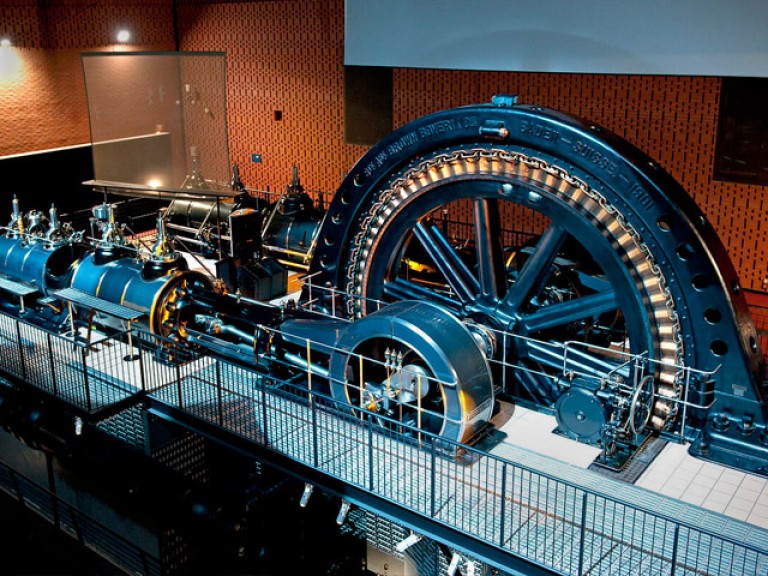
A 170-ton metal monster
This foreign-built compressor has a Brown-Boveri and Co (BBC) alternator manufactured in Mannheim, Germany. It is powered by a Sulzer steam machine, manufactured in Winthertur (Switzerland).
It perfectly illustrates the technological transition phase between steam use, the main energy source at the beginning of the industrial age, and electricity, corresponding to the second industrial period.
The furnaces produced steam at a pressure of 12 bars that operated four pistons of the steam machine contained in the four cylinders: high-pressure, medium-pressure and 2 low-pressure cylinders.
The movement of the pistons, transmitted by connecting arms and crank arms, sets off the alternator's giant wheel. The wheel also acts as a flywheel: its mass stabilizes the machine's movement... It provides alternative current by way of its 72 electromagnets, which were powered by direct current from a direct current generator called an exciter. The poles of the electromagnets are alternated: one north, one south...
When the wheel, which is the alternator's rotor, turns, the rapid changes of the magnetic field in front of the fixed component - the stator - generate an alternative current in its copper armatures. The alternator then produced a 900 KW electrical current with a voltage of 400 V and a frequency of 45, then 50Hz as of 1922.
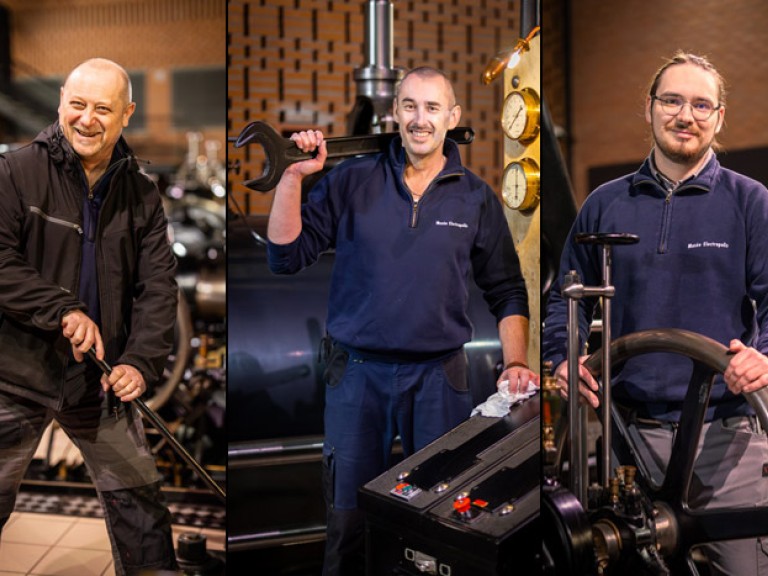
A machine among men
Trained personnel ensured the machine's proper functioning. As of 4 am, the boiler operators supplied coal so that the required pressure was reached by 7 am. Their work was the toughest because of the heat and the carbon dioxide, which made the air unbreathable.
The machinists who arrived around 6:0 were in charge of preparing the machine and ensuring its proper functioning for the whole day.
The oilers were in charge of constantly filling the 48 "drip" grease fittings and used burettes to lubricate 315 oiling points every half-hour.
The men worked to the rhythm of the foreman's whistle, the only way he could be heard above the noise of the alternator.
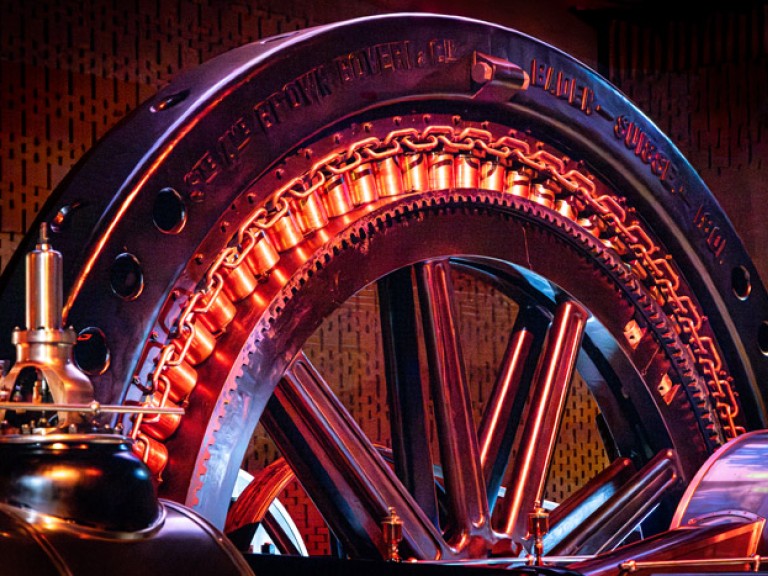
A thoroughly restored heritage
Transferring the "Great machine" from the DMC plant to the brand new museum building required complex logistics and the expertise of specialists. The machine had to be completely disassembled, part by part, then restored before being put together again. The objective was to have it in running condition for the visitors of the museum.
Great care was brought to the materials used for the restoring project. It was necessary to renovate or reproduce certain parts that had been too badly damaged. After over 20,000 hours of work the wheel turned once again on 18 November 1985, more than two years after the start of the process. The machine was started up using steam produced by an electric boiler.
Today, two electric motors drive the rotor. In order to function properly it still requires application of lubricants every hour to the 315 oiling points and the grease fittings. The rotation speed of the wheel is 21 turns per minute, which is four times less than in 1901...
Come and admire the great Sulzer-BBC machine
The show of the great machine, the audio for the three films is available in English
-

When?
I consult the opening hoursEvery day (except Monday) continuously, from 11:15 a.m. to 5:15 p.m.
-

-
